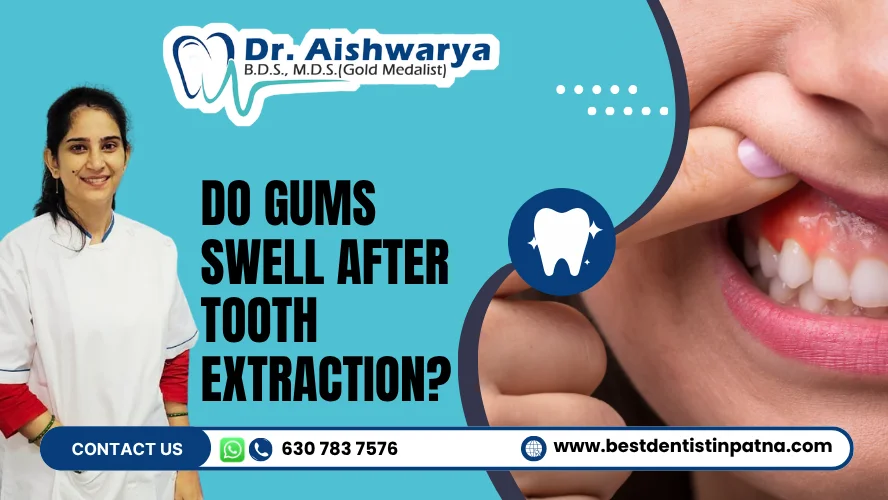
A slight gum swelling after having a tooth extraction can be quite distressing. Particularly when you are not sure whether it is part of normal healing or a complication. The comforting news is that the mild swelling is often due to the gums and other tissue reacting to the extraction. And usually resolves as the mouth starts to heal.
In some cases, if the swelling increases, persists or causes bad pain and fever, then a visit to the dentist may be necessary. Knowing what to expect after an extraction will assist you in monitoring your progress more easily.
So, let’s look at why swollen gums after tooth extraction occur. We will also look at the cause, healing time and when you should see a dentist.
Is Swelling Normal After Extraction?
Yes, mild swelling in the gum is fairly normal after a tooth removal.
When a dentist takes a tooth out, there is dental trauma to the gum and tissues around the teeth. The blood flow can increase as this helps healing, which can make the gum swollen or sore.
Swelling may reach the maximum in the first few days of your treatment. And this can lead to some slight discomfort whilst eating or opening your mouth. This swelling should come down as you heal.
Usually, slight tenderness and tolerable pain are to be expected. Also, the lack of fever, pus, or deterioration of symptoms would also generally indicate a normal recovery.
What Causes Gums to Swell After Tooth Extraction?
Your gums will take time to recover from an extraction. For this reason, swollen gums after tooth extraction can occur for a number of reasons. Most of these are temporary but a few will need to be seen by a dentist.
Common reasons include:
- Natural inflammation: Your body sends extra blood and immune cells to the extraction site to begin healing.
- Tissue irritation: The gums may become irritated during the removal of the tooth, particularly after a complex extraction.
- Surgical extraction: Removing an impacted or difficult-to-reach tooth can cause more swelling than a simple extraction.
- Food particles: Small food particles can become trapped around the healing area and irritate the gums.
- Smoking or tobacco use: These habits can interfere with healing and irritate the extraction site.
A difficult extraction is more likely to produce swelling. Swelling with fevers, pus, or very severe pain however requires dental attention. Knowing how to follow tooth extraction healing stages can help you track normal recovery.
What Happens During Healing After Tooth Extraction?
As soon as the dentist extracts a tooth, your body begins healing it right away. The process is slow and the look of the site after extracting may vary at each stage. Do not worry if it does not look entirely normal.
The main tooth extraction phases usually include:
- Blood clot formation: A blood clot develops inside the empty socket soon after extraction. It protects the underlying tissues and supports healing.
- Early tissue repair: During the following days, new tissue starts forming around the extraction site. Swelling and tenderness should slowly settle.
- Gum closure: Over the next few weeks, the gum tissue gradually covers the area where the tooth was removed.
- Bone healing: The deeper bone continues to rebuild beneath the gum. This process takes considerably longer than surface healing.
Mild tenderness, sensitivity, swelling, or other changes around the extraction site may be experienced during the healing process. These will gradually subside. If swelling or other symptoms increase with time, dental advice should be obtained for reducing the swelling.
How Can You Reduce Swelling After Tooth Extraction?
In most cases it is possible to treat mild swelling with basic aftercare while you recover. Follow your dentist’s advice, especially following a surgical extraction.
Try these measures:
- Use a cold compress: Apply it gently to the outside of your cheek for short intervals during the first 24 hours.
- Choose soft foods: Opt for foods that require minimal chewing and avoid very hot or spicy items near the extraction area.
- Avoid smoking and tobacco: These can interfere with healing and increase the risk of complications.
- Do not disturb the socket: Avoid touching the area with your fingers or tongue and do not rinse forcefully.
- Rest adequately: Taking it easy after the procedure can support a smoother recovery.
These stages may relieve the pain and can help in the normal healing process. But, in case the swollen gums after tooth extraction intensify or show abnormal symptoms, it is better to call upon the dentist immediately.
When Should You See a Dentist for Swollen Gums After Tooth Extraction?
All cases of swelling do not necessarily indicate a complication. However, you must make contact with your dentist if the symptoms appear to be worsening rather than settling down.
Watch for these signs of dental infection after an extraction:
- Swelling that continues to increase.
- Severe or worsening pain.
- Pus or unusual discharge from the extraction site.
- Increasing redness or tenderness around the gums.
- Difficulty opening your mouth.
- Swelling that spreads toward the cheek or face.
Get dental advice if you experience gum swelling 2 weeks after tooth extraction. Particularly if painful or discharging. A dentist can examine the site and advise appropriate treatment.
Why Choose Best Dental Clinic in Patna?
If you experience ongoing swelling following an extraction you may feel concerned about the healing of your mouth. Seeking advice from a qualified dentist on examining the area may reveal the reason why.
At Dr. Aishwarya, B.D.S., M.D.S. (Gold Medalist), we provide comprehensive dental care with a focus on accurate diagnosis, personalized treatment planning, and clear patient guidance. Tooth Extraction is performed after assessing the patient’s condition and the guidelines are provided for post-extraction care.
With 11+ years of experience, Dr. Aishwarya combines modern dental technology with a patient-centered approach to provide comfortable and effective dental care.
If you’re looking tooth extraction treatment in Patna, visit Dr. Aishwarya, B.D.S., M.D.S. (Gold Medalist) for a professional dental evaluation and personalized guidance on post-extraction care.
Conclusion
Recovery period after tooth extraction is varied in each individual. But if symptoms are persistent and worsening, then this may require consultation with a dentist and help to determine the cause.
The dentist will be able to examine the extraction site during your appointment and will be able to provide instructions on what is the correct care. Contact your dentist if the pain, bleeding, fever or any abnormal change increases.
Having the proper advice from Dr. Aishwarya is listed as a B.D.S., M.D.S. (Gold Medalist) will certainly make the process of recovery easier and will boost your confidence regarding the oral health matters. For professional personalized dental care, visit the best dental clinic in Patna.
FAQs
Still have questions or experiencing swelling after tooth extraction? Let’s clear your doubts and help you understand the right post-extraction care.
1. How long does gum stay swollen after extraction?
The gum swells in the first 3-7 days following the extraction of a tooth. If your gum swelling worsens or persists, please seek an evaluation by a dentist.
2. How do you know if gum is infected after tooth extraction?
Increasing pain, pus, fever, or worsening swelling may indicate infection. It is wise to seek the advice of a dentist if you are experiencing any of these symptoms.
3. Is it normal to have swollen gums after tooth extraction?
Yes, mild swelling is common during early healing.
4. Can I eat normally after 3 days of tooth extraction?
Most people return to their normal diet over a period of 3 days or so but it is advisable to start with softer foods against the pain in the extraction site. Start with softer foods and slowly go back to a normal diet. Choose foods that will not cause pain or irritate the area of extraction.
5. What is tooth extraction cost in Patna?
Cost of tooth extraction in Patna can vary depending on type of teeth to be extracted and complexity of the case. To get the best quote for your dental treatment, please book an appointment at the best dental clinic in Patna