Have you experienced jaw pain after a dental implant and thought that perhaps something was wrong?
Although a certain degree of soreness is normal following implant surgery. As the gum, jawbone and other tissues surrounding the implant need time to recover.
Nonetheless, the discomfort should become more manageable over time as opposed to continually intensifying. Jaw pain after dental implant can happen due to typical swelling, strain on the muscle, or irritation of the area that has been treated. However, pain that becomes constant or intensifies could be a sign of a dental problem.
Knowing the potential reasons can inform you about what’s normal and abnormal. This blog covers the reasons for pain, possible severity, how it can be diagnosed, and what a recovery might be like.
Why am I Having Jaw Pain After Dental Implant?
Discomfort post dental implant can be caused by a number of reasons. Some pain and swelling are inevitable with most dental surgeries, however continued or increasing pain are not. This pain may be due to a complication with the implant, surrounding bone, nerves or adjacent teeth.
1. Normal Surgical Inflammation
Placing the implant requires penetrating through the gum and into the jaw bone. This will naturally cause inflammation of the tissues surrounding the implant. During the healing time, inflammation around the site may result in tenderness, pressure and ache.
All of this is not usually noticeable after the tissues have healed. But pain which persists and is getting worse instead of settling may need to be assessed.
2. Infection Around The Implant
An infection may form around a recent implant and produce more than normal post-operative pain. Bacteria can invade the healing tissues and be more likely if there is plaque build-up around the surgical site or if healing is delayed.
Flare-ups of increasing pain and swelling, redness, tenderness, pus, fever, or bad taste may all be due to infection. These symptoms need to be checked by the best dental implant clinic in Patna rather than a normal pain of healing.
3. Nerve Irritation Or Injury
The other possibility is pain from the nerve, particularly if an implant is in the lower jaw in close proximity to the inferior alveolar nerve. This can give rise to symptoms unlike usual post-operative pain.
Burning, feeling of prickling, lightning-shock type pain, numbness, or changed sensation in the region of lower lip, chin, or neighboring area. May be related to nerve pathology. Dental consultation as early as possible is advisable for proper diagnosis and treatment.
4. Incorrect Implant Position
The placement and angulation of an implant are significant for successful treatment. The placement of the implant should be considered with regards to adjacent root tissue, nerve and blood supply and volume of bone available.
An implant placed too close to adjacent teeth roots or other structures may be a factor in continuous pain or other problems. However, an x-ray may aid in the assessment of the implant position in (also) relation to dental implant for multiple missing teeth.
5. Excessive Bite Pressure
Inappropriate or heavy biting forces may occasionally be a factor in peri-implant sensitivity after placement of the final crown/restoration. If the restoration is subjected to undue stresses of forces, tissues may be subjected to trauma.
Pain that occurs mainly during biting or chewing should be reported to the treating dentist. A clinical examination can determine whether the bite or restoration is contributing to the discomfort.
6. Problems With Nearby Teeth
One should remember that not all pain around an implant is due to the implant. The neighboring tooth may have caries, infection, a root problem or periodontal disease.
Finding the cause of the pain can be difficult, as the adjacent teeth, gums, bone and implants can be close to each other. So a dentist may also check the teeth next to the problem site.
In general, post-implant pain does not necessarily mean the implants are not successful. Factors such as the level of pain, its intensity, site, and nature of other symptoms are very helpful in providing the clues. Increasing pain with swelling, discharge, numbness or mobility should be examined by the dentist.
How Do I Know If My Jaw Pain is Serious?
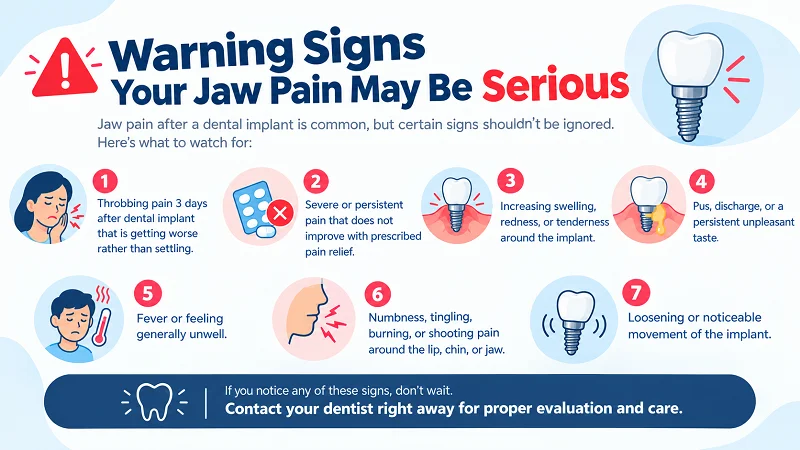
Some discomfort can occur during normal healing, but jaw pain after dental implant deserves attention when it becomes stronger instead of gradually improving. The pattern of pain matters more than the pain alone.
Certain symptoms can indicate infection, nerve involvement, if you’re not following the aftercare tips for dental implant.
Watch for these warning signs:
- Throbbing pain 3 days after dental implant that is getting worse rather than settling.
- Severe or persistent pain that does not improve with prescribed pain relief.
- Increasing swelling, redness, or tenderness around the implant.
- Pus, discharge, or a persistent unpleasant taste.
- Fever or feeling generally unwell.
- Numbness, tingling, burning, or shooting pain around the lip, chin, or jaw.
- Loosening or noticeable movement of the implant.
The timing can also be informative. Mild, early swelling and soreness is common in the early healing stages. While progressively worse pain after the initial healing phase is more alarming.
What will the Dentist Do to Diagnose it & What are the Treatments?
Your dentist can use inspection, your gums, the implant’s neighborhood, teeth, and bite to pinpoint your pain’s cause. If your implants give you some discomfort, X-rays and/or 3D imaging are another way of investigating a pain in your new smile.
Treatment depends on the underlying cause. Options may include:
- Antibiotics for an infection.
- Bite adjustment for excessive pressure.
- Treatment for nearby tooth or gum problems.
- Management of nerve-related complications.
- Further treatment if the implant lacks proper stability.
Also there the dentist can determine how fast there is healing of the implant and if the bone around the implant is healthy. Additionally, on the basis of the results of the operation, the treatment can be observational, medicinal or operationally medical/surgical.
What to Expect During My Recovery Journey?
Healing after the implant insertion takes place over a period of time. Some tenderness, swelling and tenderness when chewing may be felt during the initial healing period. This will settle down gradually.
Recovery Timeline:
- First 1-3 days: Mild to moderate soreness, swelling, and tenderness may occur.
- Days 4-7: Discomfort should gradually decrease, although some sensitivity can remain.
- Weeks 2-4: Soft tissues continue healing, and normal eating usually becomes easier.
- Following months: The implant continues integrating with the jawbone, while the final restoration may be completed according to the treatment plan.
Having the treatment period over, adhere to the given aftercare advice for dental implants. And keep the oral area clean and free of any undue stress on the dental implant. If the jaw pain after dental implant worsens rather than eases, seek a dental examination.
Will Jaw Pain Lead to the Neck as well?
Yes, pain after dental implant in the jaw can sometimes radiate into your neck.
The muscles of the jaw, face and neck are interconnected, and pain or muscle tension in the areas around the jaw can cause pain spreading into the neck.
In addition, if the neck pain progresses along with the jaw pain, there is marked swelling, fever, dysphagia, or dyspnea, then seek dental or medical attention immediately. These signs could be representative of an infection or other complication.
Why Choose Dr. Aishwarya?
A dental implant treatment may have the best of plans, but if the pain or fear overwhelm you, all that is of no use.
Dr. Aishwarya B.D.S., M.D.S. (Gold Specialist) understand your fears and have a caring attitude that they listen and understand your concerns. And then patiently explain and ensure you understand the treatment procedures.
The clinic’s experienced team offers dental implant treatment in Patna using digital X-ray technology, 3-dimensional imaging, to ensure comfort and care for every patient. Dr. Aishwarya will help throughout the healing stages of treatment and answer queries as they arise.
If you are experiencing pain in your jaws, then you should consult Dr. Aishwarya to be given advice about the best treatment.
Get The Right Dental Care!
It is natural to worry when your pain persists after a dental implant. Doubts about if this pain is usual, whether your healing is on track or if there is a problem, can be very anxiety-provoking. A brief dental visit can put your mind at rest and identify the real reason for your pain.
No matter if the pain is just due to healing, infection or something else, a check-up can make the appropriate course of action easier to decide upon. It can also help to nip a problem in the bud.
If your jaw pain after dental implant is something you are concerned about, visit the best dental clinic in Patna and get individualized treatment and the support you need to proceed with less anxiety and better comfort.
FAQs
Why is my implant hurting after 2 years?
Pain after two years may be linked to infection, gum disease, bite problems, bone loss, or an issue with the implant or nearby teeth.
Can a failed dental implant be repaired?
Some failed implants can be treated, but the appropriate solution depends on the cause and condition of the surrounding bone and tissues.
How do I know if my dental implant is healing correctly?
Gradually decreasing discomfort, healthy gums, and stable implant placement are generally reassuring signs, while increasing pain or swelling needs dental evaluation.
How much does a dental implant cost in Patna?
The dental implant cost in Patna varies based on the number of implants, bone condition, and type of crown or restoration required.
How many days should you rest after a dental implant?
Most patients need a few days of lighter activity, although the recovery period varies depending on the complexity of the procedure.