Your smile is more than just regular brushing and flossing. There will be times in your life when your teeth need professional attention to remove stubborn plaque, tartar and bacteria. However, not every dental cleaning procedure is the same.
A regular dental cleaning is great for maintaining healthy teeth and gums, but a deep cleaning targets bacterial deposits below the gum line.
So, deep cleaning vs regular cleaning: which treatment do you actually need?
The difference between these two treatments will go a long way in maintaining your oral health. Depending on the treatment, you’ll get to know how these procedures can help you achieve your dental health goals.
What Is Regular Cleaning vs Deep Cleaning?
Both of the dental procedures discussed in this article help you with getting rid of plaque and tartar but they serve different purposes.
Regular cleaning involves getting the plaque, tartar and surface stains from your teeth removed, especially from the junction of your gums and teeth. It helps you prevent cavities, avoid bad breath and also keep gingivitis at bay.
Deep cleaning involves removing plaque and tartar from the region below your gums and also getting rid of the bacteria that are present there. Additionally, the process also includes the smoothing of your tooth roots which allows your gums to heal.
In short, regular cleaning prevents problems, whereas deep cleaning treats existing gum disease. Visiting an advanced dental clinic in Patna can help you identify which procedure your gums need.
Regular Cleaning vs Deep Cleaning: 6 Major Differences
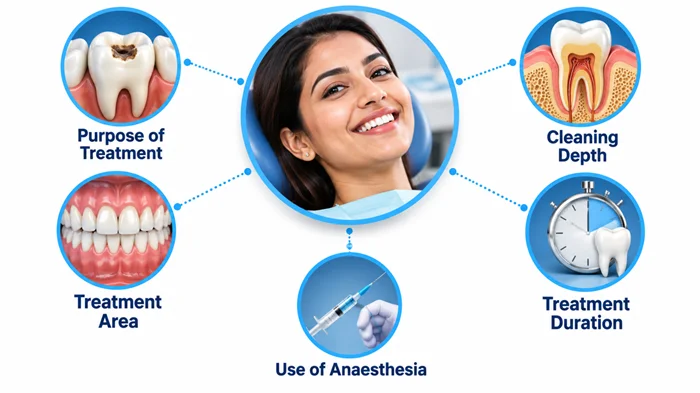
Both are done to remove the build-up of plaque and tartar, but they aren’t the same thing. They may have similar purposes, but they differ in how deep, long, and how they aid in recovery.
If you’re considering teeth cleaning in Patna, here are six key differences to help you understand both procedures.
1. Purpose of Treatment
Deep cleanings are designed to treat existing gum disease. Bacteria that has built up under your gum-line has caused your gums to become swollen and inflamed. In some cases, it can even lead to damage to the supporting gum and bone structure of the tooth.
Regular cleanings, on the other hand, are meant to keep you and your mouth in good oral health. Bacteria, plaque, tartar, and stains can be removed before they have the chance to lead to tooth problems. Regular cleanings can help prevent cavities, bad breath, and signs of gum disease.
2. Cleaning Depth
A regular cleaning procedure helps in maintaining good oral hygiene and prevents further buildup of bacteria. It removes plaque and hardened tartar deposits from the visible surface of the tooth and areas around and above the gumline. If bacteria build up it can start to affect the gum line.
Whereas a deep cleaning reaches below the gumline in order to remove the build-up of bacterial deposits that have crept into the gums. It may also make existing gaps in teeth after deep cleaning more noticeable as swollen gums heal and shrink.
3. Treatment Area
Cleaning all of your teeth regularly is about removing both the visible surfaces of the teeth and the dirt trapped in between two adjacent teeth. This kind of dental care is meant to keep your whole mouth clean and healthy rather than fix a particular problem.
On the other hand, deep cleaning deals with periodontal disease areas. Depending on the level of damage the gum has undergone, your dentist might only clean the problem teeth and other parts of your mouth separately.
For example, if your gums have developed deep pockets around several teeth, the dentist may focus on those affected areas. This targeted approach also helps manage concerns such as teeth sensitivity after scaling through suitable treatment and aftercare.
4. Treatment Duration
The duration of each procedure varies depending on your overall dental condition and the degree of tartar.
Typically, routine scaling and polishing last anywhere between about half an hour to an hour. Many patients manage the process during one office visit as the focus is mainly on thoroughly cleaning the outer surfaces of the teeth.
In contrast, extensive cleaning or subgingival curettage is a more time-consuming process. The dentist needs to delicately eliminate the plaque and the calculus buildup underneath the gingival tissues. Therefore, deep cleaning may consist of several sessions.
In certain situations, the dentist works on different areas of the mouth one at a time.
5. Use of Anaesthesia
Most people who just go for a routine cleaning don’t need anaesthesia since the procedure barely hurts. But some people with very sensitive teeth or gum inflammation might feel a little uncomfortable.
A deep cleaning session is another thing altogether because the dentist will be working under the gum. There is a high possibility that one will be given some local anaesthetics to have a comfortable experience during the treatment. They help numb the area and give the dentist full access to clean out periodontal pockets thoroughly.
In most cases, anaesthesia depends on the condition of your gums and the specific type of treatment you need. Therefore, your dentist will be the one to decide whether you need anaesthesia or not.
6. Recovery and Sensitivity
Recovery is one area where these methods are clearly different from each other.
After regular cleaning, almost everyone can go back to their daily routines right away. You might get a mild soreness in the gums, or sensitivity that comes and goes, especially if you had a large amount of tartar on your teeth.
Deep cleaning may cause more noticeable side effects, including:
- Mild gum bleeding or tenderness.
- Temporary swelling around treated areas.
- Sensitivity to hot and cold foods.
- Slight discomfort while brushing.
Teeth sensitivity following scaling might not be something everyone will have to deal with. But it is definitely one of the possible reactions, in particular after a thorough deep cleaning process. In that case, a dentist will give some good tips on the usage of desensitizing toothpaste and the ways you can help your tooth recover.
Benefits of Regular Cleaning vs Deep Cleaning
The treatments help improve oral health and their benefits vary depending on one’s dental health. Regular cleaning can be a good way to avoid dental problems while deep cleaning has been used in controlling existing gum diseases. Knowing them makes clear why dentists come up with different treatment combinations.
Benefits of Regular Cleaning:
- Prevents Tartar Buildup: Removes hardened deposits that regular brushing cannot eliminate.
- Supports Healthy Gums: Reduces plaque accumulation and helps prevent gum inflammation.
- Controls Bad Breath: Removes bacteria and food debris that contribute to unpleasant breath.
- Protects Natural Teeth: Helps reduce the risk of cavities and early gum problems.
- Improves Oral Hygiene: Keeps your teeth cleaner and makes daily brushing more effective.
Benefits of Deep Cleaning:
- Reduces Gum Infection: Removes bacterial deposits from beneath the gumline.
- Helps Control Periodontitis: Reduces inflammation and helps prevent further periodontal damage.
- Reduces Gum Pocket Depth: Allows gum tissues to heal and may reduce the spaces between teeth and gums.
- Protects Supporting Tissues: Helps control the progression of damage affecting the structures that support your teeth.
- Supports Long-Term Gum Health: Makes periodontal maintenance more effective when combined with regular dental follow-ups.
However, deep cleaning cannot reverse existing gum or bone damage. If you’re wondering can teeth cleaning remove cavity, remember that cleaning removes plaque and tartar, not tooth decay. Your dentist may recommend additional treatment depending on the severity of periodontitis or cavities.
How Does a Dentist Decide Which One You Need?
A dentist examines your teeth and gums before recommending either procedure. The decision depends on your gum condition, tartar buildup, and signs of periodontal disease.
During the examination, the dentist may:
- Check Tartar Buildup: Examine deposits around your teeth and gumline.
- Measure Gum Pockets: Identify deeper spaces that may indicate periodontitis.
- Check Gum Inflammation: Look for swelling, redness, and bleeding.
- Assess Bone Support: Use dental X-rays when necessary to identify bone loss.
If your gums remain healthy, regular cleaning may be sufficient. However, signs of periodontitis may require deep cleaning.
Why Choose Dr. Aishwarya?
Choosing between regular cleaning and deep cleaning can be confusing, especially when you are unsure how much tartar has accumulated beneath your gumline.
At Dr. Aishwarya, B.D.S., M.D.S. (Gold Medalist) clinic, patients receive a thorough dental assessment to identify their gum condition and understand which cleaning procedure is appropriate. Whether you need routine scaling to maintain oral hygiene or deep cleaning to address existing gum problems, the clinic helps you understand your treatment needs and guides you through the process.
This ensures your dental care focuses on the actual problem, helping you maintain healthier gums and protect your natural teeth.
FAQs
Here are answers to some common questions about regular cleaning, deep cleaning, their benefits, and aftercare.
Is deep cleaning different than regular cleaning?
Yes, regular cleaning removes deposits above the gumline, while deep cleaning targets bacteria and tartar beneath it.
Is deep cleaning a good idea?
Yes, when recommended for periodontitis, deep cleaning helps control gum infection and prevent further damage.
What should you not do after deep cleaning?
Avoid hard, spicy, or very hot foods, smoking, and aggressive brushing until your gums recover.
What is the teeth cleaning cost in Patna?
The teeth cleaning cost in Patna typically costs between ₹500 and ₹3,000, depending on the type of cleaning needed and the clinic.
Conclusion
Regular cleaning and deep cleaning both play important roles in maintaining healthy teeth and gums, but they serve different purposes. While regular cleaning removes everyday plaque and tartar to prevent gum problems, deep cleaning targets bacterial deposits hidden beneath the gumline to manage periodontitis.
Therefore, don’t wait for bleeding gums, persistent bad breath, or discomfort to become serious concerns. Schedule a dental examination and let your dentist assess your gum health before recommending a procedure.
Remember, choosing the right treatment at the right time can help protect your natural teeth and support a healthier smile for years to come.