A root canal treatment allows us to soothe the pain in a tooth, eliminate infection, and preserve the natural tooth. The bite or pressure you apply to the treated tooth may still be tender after your root canal treatment. But the tenderness should subside quickly, as the tissues around the tooth begin to recover.
However, do not delay if your pain continues, is severe or becomes worse. It could be due to inflammation, a high filling or crown, incomplete healing, recurrent infection, or a crack in the treated tooth. The underlying cause of the pain must be known for a correct treatment to be possible.
This blog explains why a tooth with a root canal hurts with pressure, when it can be a concern, and how the problem can be diagnosed and treated.
Is Some Pressure Sensitivity Normal After a Root Canal?
Yes. You may feel a mild degree of sensitivity after root canal treatment, which is normal. The surrounding tissues of the root of the tooth can also become temporarily irritated during a root canal treatment. Additionally, the tooth may become tender when biting or chewing or when pressure is applied to the tooth.
Generally, the healing period is characterized by improving pain. However, the time frame depends on various factors like pre-treatment infection, complexity of endodontic treatment and condition of root(s) filled tooth. If pain is severe, returns or persists, a check-up is recommended by a dentist.
Why Does My Tooth Hurt After a Root Canal?
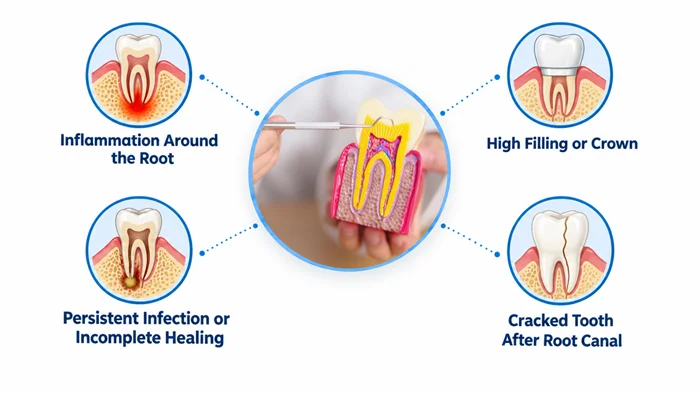
If your tooth with a root canal hurts with pressure, several factors may be responsible. Identifying the actual cause is essential because different problems require different treatments.
A. Inflammation Around the Root
The area of the tissues surrounding your tooth’s root could continue to be sore after your root canal, particularly if there was a large infection involved in the tooth. This can be painful when biting down or putting pressure on the root. The pain will slowly lessen as the tissues recover.
B. Cracked Tooth After Root Canal
A root canal-treated tooth can be more vulnerable to cracks when substantial tooth structure has been lost. A crack may cause sharp pain when biting down or releasing the bite. In some cases, a root canal for cracked tooth may be considered if the crack has affected the pulp but the tooth can still be saved. But, depending on the extent of the crack, a crown or other restorative treatment may be considered as well.
C. High Filling or Crown
The restoration or filling is marginally over the level of the other teeth. This can mean that when you bite down you put too much pressure on the treated tooth. Pain is often felt particularly when chewing or you can feel the tooth makes contact first. Therefore it is mandatory for a dentist to adjust this with a simple fix.
D. Persistent Infection or Incomplete Healing
Sometimes bacteria may hide in a more complex part of the root canal system or the infection may not be entirely eliminated around the tip of the root. If the discomfort persists, subsides, then reappears or is associated with a swelling, then retreatment or other endodontic procedures may be in order.
The bottom line is, pressure pain doesn’t necessarily indicate your root canal has failed. Your dentist can make the diagnosis after a thorough oral exam to decide if you need observation, bite adjustment, restoration or retreatment.
When Does Root Canal Pressure Pain Become a Concern?
Mild tenderness may exist for a short time. However, there are certain signs which need to be addressed promptly by a dentist.
Watch for the following warning signs:
- Pain that becomes worse instead of gradually improving.
- Severe discomfort while biting or chewing.
- Swelling around gums after root canal.
- Pus, bad taste or recurrence of gum boils.
- Fever or difficulty opening the mouth.
They may mean you have a dental problem that requires treatment, such as a dental infection or inflammation. If you experience rapidly spreading facial swelling, high temperature, and difficulty in swallowing or breathing, seek immediate medical attention.
Therefore, root canal pain which occurs when biting should not be treated with painkillers. A proper dental examination can establish the cause and prevent it from getting worse.
How Is the Cause of Root Canal Pain Diagnosed?
If a patient experiences toothache after root canal treatment, the dentist first takes a detailed history of the previous dental treatment. They also assess when the pain occurs, especially whether it worsens while biting or applying pressure.
A clinical examination may include:
- Checking the treated tooth and surrounding gums.
- Performing biting tests to identify pressure-related discomfort.
- Checking the height of tooth filling or crown.
- Checking for possible damage to the root and the surrounding bone by taking dental X-rays.
In selected cases, additional images, such as CBCT, may be needed.
A thorough assessment is made at Dr. Aishwarya’s clinic to determine if the patient’s discomfort is part of the natural healing process, a bite related problem, an infection or even a hairline crack in the tooth.
Can This Be Fixed Without Redoing the Root Canal?
Yes. Every root canal treated tooth with pain does not need retreatment. The decision depends on the cause(s) of pain.
- High filling: The dentist may have to cut a little off the filling and/or crown to relieve excessive pressure in between.
- Post-treatment inflammation: The mild inflammation that may occur can clear up within a short period of time with simple monitoring and adequate pain control.
- A cracked tooth: It may need a dental crown to protect it from further damage, depending on the extent of the crack.
- Persistent infection: Root canal retreatment or additional endodontic treatment may be required to treat an infection or root canal problem that was not completely treated.
The aim of endodontic treatment is to remove decay, clean and fill roots. So that, it can preserve the natural tooth whenever possible. Therefore, a full dental examination by the best dentist in Patna is necessary to decide on retreatment of a root-filled tooth.
Why Choose Dr. Aishwarya for RCT in Patna?
If a root canal treated tooth is sore, it is very important to find a dentist who takes time to think through the problem. In that case, Dr. Aishwarya treats their patients with advice on dental problems on an individual basis taking into account the patient’s dental status, their symptoms and needs.
Dr. Aishwarya, B.D.S., M.D.S. (Gold Medalist) helps patients to identify causes of tooth pain and helps them in getting the best possible treatment.
Patients can benefit from:
- Detailed dental evaluation: We can determine why a root canal-treated tooth is painful when biting down (for example, high fillings, inflammation or even infection).
- Personalized treatment planning: Determining if your tooth requires adjustment to your bite, restorative work, continued observation, or root canal retreatment.
- Focus on natural tooth preservation: Find out the best treatment option to protect the remaining tooth structure in your case.
- Patient-focused guidance: We will clearly explain to you the diagnosis and the various treatment options along with post-operative care instructions.
Dr. Aishwarya, B.D.S., M.D.S. (Gold Medalist), provides best root canal treatment in Patna, with a focus on accurate diagnosis, personalised dental care, and comfortable treatment.
Frequently Asked Questions
If your tooth with a root canal hurts with pressure, these FAQs explain common causes, healing time, and when retreatment may be needed.
Why does my root canal tooth still hurt when I put pressure on?
It may be due to healing inflammation, a high filling or crown, persistent infection, or a crack.
How long should a root canal tooth hurt with pressure?
Mild pressure sensitivity usually improves as the surrounding tissues heal, but persistent pain needs dental evaluation.
Does pain when biting mean my root canal has failed?
No. Pain when biting can have several causes and does not automatically mean the root canal has failed.
How long does it take to heal after a root canal?
Most mild discomfort improves within a few days, although healing around the root may take longer.
Can a root canal tooth need retreatment?
Yes. Retreatment may be needed if infection persists or the tooth has not healed properly.
Get Your Root Canal Tooth Evaluated
A sensitive root canal tooth that hurts with pressure doesn’t necessarily have to be a reason to rush back to the dental office. If pain is mild, or only occurs occasionally, it’s not likely to be the sign of a problem.
But, if it worsens or becomes persistent, it’s worth having further investigation. The cause might be from natural healing, inflammation of the root, a high filling or crown, ongoing infection, or a crack.
So, if you continue to experience pain while biting or chewing after a root canal, a thorough dental examination can help determine the cause and appropriate treatment. Therefore, for personalised advice and treatment, consult Dr. Aishwarya, B.D.S., M.D.S. (Gold Medalist).
Book an appointment today with the best dentist in Patna for expert dental care and a healthy smile.