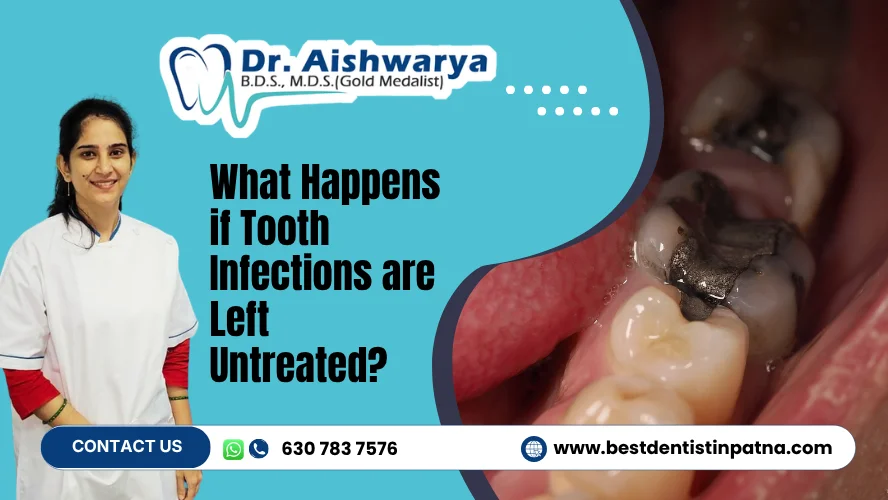
A small pain in your tooth usually does not remain small for long. This small toothache can turn into ongoing pain and even become a swollen condition or a more generalized infection of multiple teeth. As bacteria tend to move deeper, making talking, eating or drinking challenging on an everyday basis.
The delay in receiving proper care might result in other serious dental problems or it could have narrowed down the possibility of saving the native tooth. Timely care can halt the progression before irreversible and permanent damage has been inflicted upon your tooth. Therefore, pay attention to early signs and consult your dentist timely for the best treatment outcomes.
This blog explains what happens when a tooth infection is left untreated, and when visiting a dentist becomes the best decision.
How a Tooth Infection Develops?
Dental infection isn’t a chronic infection that arises from nowhere overnight. It develops bit by bit as bacteria invade the tooth via gaps, cracks, filling, as well as fissures.
From there, bacteria travels into teeth to form infection then get spread out for the adjacent gums as well as bone. Watching those warning signs of dental infection avoid developing infection into severe.
Common signs include:
- Persistent or throbbing tooth pain.
- Swollen or tender gums.
- Sensitivity to hot or cold foods.
- Pain while chewing or biting.
- Swelling around the face or jaw.
- Bad taste or pus near the affected tooth.
- Persistent, bad breath despite good oral hygiene.
Even though the pain you feel might ebb and flow, don’t take the other warning signs lightly. Often, treating the infection early in your dental health career can stop it from becoming a problem and may lead to retaining your natural tooth.
As the infection advances it will bring along much more sinister effects. Understanding the likely progression will demonstrate what can happen if you didn’t take action.
What Can Happen if a Tooth Infection is Left Untreated?
As said before, when you neglect an infected tooth, you’re giving the bacteria a chance to spread. And, from one tooth it can begin to move to surrounding tissues, the bone, and the gums which makes treatment of the infected tooth much more involved, and time consuming.
Possible complications include:
- Persistent pain: The discomfort often becomes more intense and difficult to manage.
- Swelling and abscess formation: Pus may collect around the infected tooth, causing severe swelling and tenderness.
- Damage to the jawbone: An untreated infection can weaken the bone supporting the affected tooth.
- Tooth loss: Extensive damage may leave no option but to remove the tooth.
- Spread to nearby tissues: The infection can extend to the face, neck, or surrounding areas.
- Serious health complications: In rare cases, bacteria may enter the bloodstream and affect overall health.
Going to the dentist’s clinic is the first indication that can significantly reduce the risk of complications. Fortunately, it is possible to save many infected teeth, with a root canal being a viable option.
Can a Root Canal Prevent Tooth Loss?
Oftentimes. Root Canal treatment involves removing infected pulp within the tooth. This way, no natural tooth structure is lost. It removes the cause of infection and infection from occurring in that tooth, it relieves the pain caused by that infection and helps regain original function of teeth.
However, getting timely root canal treatment in Patna can always avert tooth loss.
A root canal is usually recommended when:
- The infection has reached the tooth pulp.
- Pain becomes persistent or severe.
- Swelling develops around the affected tooth.
- The tooth can still be restored with a crown or filling.
- The surrounding bone remains healthy and unaffected.
There are numerous long-term advantages to saving the original tooth; chewing and biting functions are not compromised by a drifting neighbour, and a healthy-looking smile is maintained.
Most importantly, the early management prevents the ongoing decay of surrounding teeth.
In addition, not every tooth with a root infection can be saved. If the tooth has sustained irreparable damage, other treatments might have to be done instead.
When Tooth Removal Becomes the Only Option?
Even though dentists will always strive to rescue a tooth. In case, the infection has spread beyond the possibility of treatment, extraction might be the safest option for your other teeth and oral health.
Tooth extraction in Patna would be the ultimate remedy in such cases.
A dentist may recommend extraction when:
- The tooth is severely decayed beyond repair.
- The infection has extensively damaged the surrounding bone.
- A crack extends below the gum line.
- Previous treatments can no longer restore the tooth.
- The infection continues to spread despite treatment.
Once the procedure is done, dentists then concentrate on allowing the wound to heal appropriately, the oral functions to come back in place and the tooth. The dentist will, as a case-to-case basis, talk to the patient with regards to possible replacement of the tooth.
Even after an apparent successful recovery, you will be monitored at regular intervals. This is because in some cases, an infection can recur which will need investigation.
What if an Infection Returns After Treatment?
While success rates of root canal treatment are relatively high, it’s not entirely impossible that the infection might recur in your mouth.
In some instances, an infection after RCT can emerge if one or more canals were not found during treatment, or if the tooth is cracked, or if the new bacteria got in the root canal space.
Signs that may indicate a returning infection include:
- Pain that returns after initial relief.
- Swelling around the treated tooth or gums.
- Sensitivity while biting or chewing.
- Pus or an unpleasant taste near the tooth.
- A small pimple-like swelling on the gums.
If left untreated, this could cause a new infection to occur. In addition to performing a retreatment of a root canal, a dentist can also order a retreatment or other procedures depending on how severe the condition is.
Consulting to the best dentist in Patna, is the most appropriate choice and key to both treatment outcomes and overall oral health in the years to come.
Why Patients Trust Dr. Aishwarya for Dental Care?
Timely treatment isn’t the only thing we need to count on, success relies on the choice of our dentists.
Dr. Aishwarya applies both technical clinical skill and compassionate care to arrive at the best diagnosis and treatment plan for her patients.
As a leading dental clinic in Patna, Dr. Aishwarya B.D.S., M.D.S. (Gold Specialist) provides complete dental treatments by modern technique and technologies. We will make sure all individuals get adequate treatments according to the need of teeth and the objectives for dental health of lifetime.
From combating infections to saving the natural tooth from root canal treatments and extractions to more cosmetic concerns. Excellent hygiene, with honest consultation and approach of making patients feel comfortable at every step, aids the smooth procedure leading to good looking teeth that lasts for years.
Protect Your Smile Before It’s Too Late!
If a tooth infection is left untreated, it can develop complications that are much harder, and in the long run much more costly, to treat. Getting immediate attention can relieve a tooth infection and prevent it from spreading.
Dr. Aishwarya B.D.S., M.D.S. (Gold Specialist) clinic provides all dental treatments with the latest technology. The clinic provides a quick and precise diagnosis along with tailored treatment for every patient’s condition whether it is an infected tooth, root canal, or complex dental cases.
Every case has the aim of long-term oral care and client comfort. At our clinic, we endeavor to provide a relaxed, healthy, hygienic environment with the long-lasting result that patients are after.
Book an appointment with Dr. Aishwarya B.D.S., M.D.S. (Gold Specialist) today and receive expert treatment that keeps your smile healthy and confident.