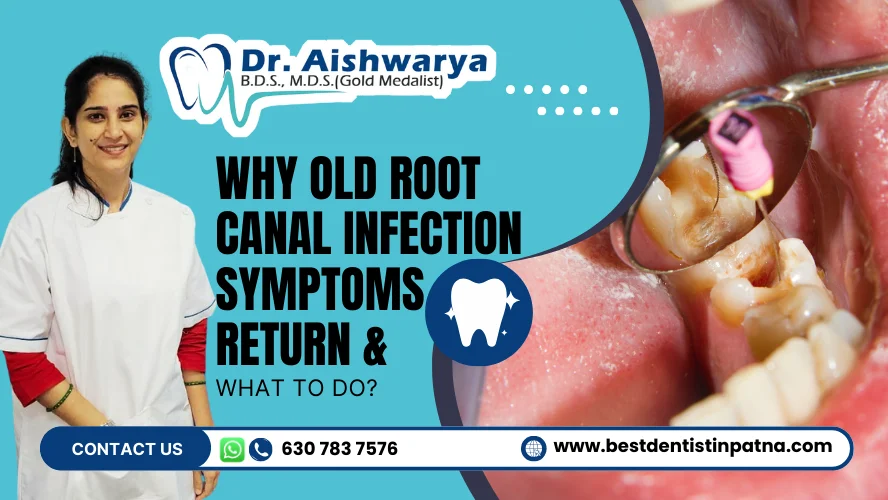
You’re certainly not the first person to experience pain or swelling again after you have already gone through a root canal treatment. It’s quite normal for many people in India (and elsewhere) to experience recurring root canal infection symptoms after their dentist has told them the problem is solved.
By determining when professional help is necessary and understanding the root causes of your symptoms, you can prevent additional issues together with unnecessary pain.
The good news is that recurring infection does not always result in tooth loss. Most cases of recurring infection that have symptoms of root canal infection returning can be treated successfully or resolved with an accurate diagnosis by an expert dentist.
In this blog, we’ll help you understand the possible causes of old root canal infection, early warning signs, and what you need to do now to protect your oral health.
How Do I Understand Root Canal Infection?
Root canal infection is the result of bacteria entering the dental pulp of the tooth, which starts an inflammatory reaction and causes infection. The pulp chamber is the part of a tooth that is hollow and contains the nerves and blood vessels.
When the pulp becomes infected, it can result in severe pain in the affected tooth and may also lead to abscess formation.
So, you need to take immediate attention of an RCT specialist in Patna who is an expert in the extraction of the infected pulp and sealing it with the tooth so that the chances of another infection are less.
However, if an old infection comes back or a new one occurs, you may experience the symptoms of the previous infections again.
Why Do Old Root Canal Infection Symptoms Return?
Root canal infections are able to come back even after a long time like months or years since the successful treatment, so patients are often in a state of confusion and frustration.
Recurring symptoms may have different explanations and these explanations are mostly deeply technical, a matter of procedure, or biological factors that influence the period of the initial treatment which is considered to be the longest one.
Knowing these reasons is actually the step behind the prevention of complications before the next visit to the dentist and getting the right treatment.
1. Inadequate cleaning of the infected pulp during the initial root canal procedure:
The most typical reason for recurring root canal infections is inadequate removal of the infected pulp during the initial endodontic therapy. The interior anatomy of the tooth is comprised of a number of small branches and pathways that connect each other. As such, if the dentist who performs the root canal fails to properly disinfect all of these regions, the bacteria may remain alive and grow; thus, the infection may reoccur.
2. Temporary Filling/Crown Failure
The root canal tooth will often be sealed off with a temporary filling or crown. If this temporary filling/crown seal gets damaged or deteriorates, then bacteria from your mouth will be able to enter the tooth and re-infect the canals. Therefore, you need a good restoration after the root canal procedure for long term success.
3. New Cavity Formation Near Root Canal Treated Tooth
Sometimes a new cavity can be formed just next to a tooth with a root canal. This new cavity can form very close to the treated tooth that it enters the old canals and creates an area for bacterial contamination to develop. Therefore, it is very important to keep regular dental check-ups and practice good oral hygiene to prevent this from happening.
4. Missing Additional Canals
Root canal teeth can have additional canals that were diagnosed at the time of root canal treatment. If a dentist misses some canals, they will never be treated and will potentially become infected which will cause to the recurrence of the symptoms associated with a failed root canal. This is one of the reason why an advanced diagnostic methods are now used in many cases of root canal treatment in Patna as they are helpful in identifying missing canals.
5. Re-Infection of Previously Successfully Treated Root Canal
Although the symptoms of the infection have disappeared after a successful root canal, there are still possibilities of the tooth becoming re-infected. These include failure of the crown or restoration, development of new decay along the margins of the tooth, and physical trauma to the tooth or surrounding bone pathology which could impede the healing process.
6. Poor Sealing of the Canals
If the canals are not adequately filled/sealed, either partially or with suboptimal materials, there may be spaces left behind where bacteria may survive and multiply. As such, the materials used and the techniques applied during the root canal treatment can have significant implications for the success of the therapy.
Warning Signs of Returning Infection Symptoms
Some common warning signs that indicate returning infection symptoms of a previous root canal are as follows:
- Discomfort or pain while biting or chewing; constant or intermittent
- Swelling of the jaw or face surrounding the tooth that had root canal treatment
- A small pimple-like bump(s) on the gum tissue surrounding the tooth that had root canal treatment
- Tenderness when pressure is applied
- Darkening of the tooth
- Bad taste/odor
- Swollen lymph nodes
So these are the red flags and if you experience any of the above-mentioned symptoms, then you need to visit as early as possible to your nearby dentist for help.
Do not hesitate or delay because these signs are not minor; they can lead to bone structure loss around the tooth, systemic infection, and sometimes tooth extraction.
What To Do When Old Root Canal Symptoms Return?
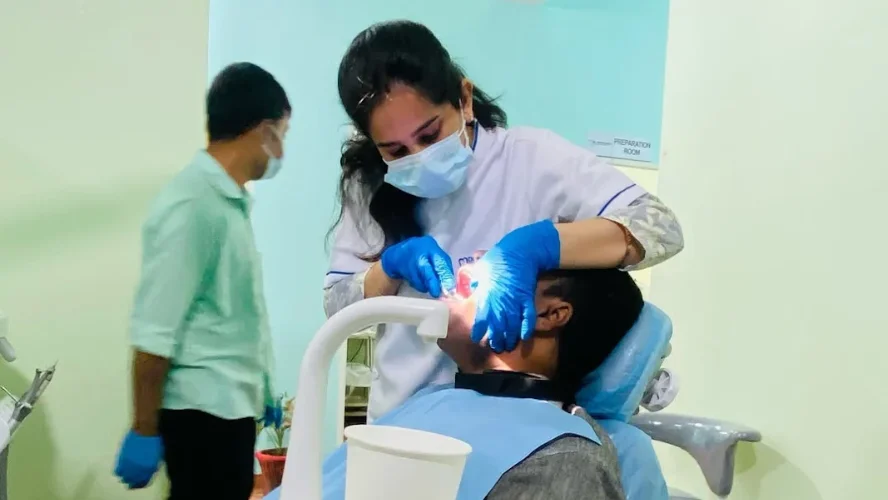
1. Schedule an Appointment Immediately
Don’t expect it to disappear by itself. It is a fact that it won’t disappear on its own. At the very first indication of any of the symptoms that have been mentioned above, consult your dentist who performs root canal treatment in Patna. If you go to the dentist at an early stage, then the probability of saving your tooth without making a mess is very high.
3. Diagnostic Imaging
When you visit for the treatment, most of the time your dentist may ask for X-rays or any kind of detailed scan like CBCT (Cone Beam Computed Tomography) to know what exactly is the condition of your tooth. In this procedure, the dentist confirms that the prior root canal treatment was sufficient and also checks for any newly discovered problems, such as unaddressed canals, incomplete fillings, or deterioration of the bone.
3. Retreatment Options
Many times, a retreatment, also known as a non-surgical endodontic therapy, will need to be performed. This involves removal of the prior filling material, cleaning of the canals once again, and then sealing the canals even more effectively than before. The use of modern techniques and equipment, and materials available today, offers significant successes in retreatment procedures.
4. Surgical Options
If non-surgical retreatment is either not possible or the non-surgical retreatment is unsuccessful your dentist will likely recommend a surgical endodontic treatment or apicoectomy. An apicoectomy is a surgical procedure that involves removing the tip of the infected tooth’s root to eliminate the source of the infection.
5. Extraction and Replacement
It is very uncommon for the tooth to be lost. In that case, the dentist will most likely suggest to have the tooth extracted and then place a tooth replacement, such as an implant, bridge, or removable partial denture.
How Dr. Aishwarya Can Help You?
Dr. Aishwarya B.D.S., M.D.S. (Gold Medalist) offers the finest of endodontic services in Patna for all kinds of root canal treatments. Dr. Aishwarya is an expert in the diagnosis and management of complex endodontic problems like failed root canals and chronic infection.
If you are suffering from the signs and symptoms of a recurring root canal infection, you will feel confident that Dr. Aishwarya will provide you with an accurate diagnosis and treatment that is appropriate.
Incorporating the latest techniques, with the latest in diagnostic equipment including digital images, rotary instrumentation systems, Dr. Aishwarya evaluates each patient on a case by case basis; assessing what is required to treat your condition.
She has a proven track record of delivering the very best of results and has many satisfied patients that she has been able to save from extraction, thanks to her endodontic therapy.
When you choose Dr. Aishwarya’s leading dental clinic in Patna for your root canal treatment, you’re not just getting a procedure—you’re investing in your long-term oral health and peace of mind.
Prevention: How to Avoid Recurring Infections?
The following steps will help you avoid getting root canal infection symptoms in the future:
- Brush at least two times a day and floss daily.
- Get a crown on your previously treated tooth as soon as possible. This will help to protect it.
- Never use your teeth to tear open packages, etc., and do not chew on things that are very hard.
- Visit your dentist twice a year for regular check-ups.
- When new cavities occur get them treated as soon as possible so they do not involve the previously treated tooth.
- Smoking delays healing, so do not smoke.
- Manage stress properly and make sure you have a generally healthy immune system.
Final Thoughts
If you are suffering from a root canal retreatment infection symptoms, it means that you need further dental care from a dentist. A tooth infection that returns after root canal treatment may be due to incomplete treatment in the past, a failed restoration, or a new issue entirely. In any case, it is strongly suggested that you get help from a skilled dentist.
Dr Aishwarya, B.D.S, M.D.S (Gold Medalist) offers professional and personalized endodontic services to meet all your needs related to root canal treatment in Patna. She has undergone extensive training and will provide you with the best care possible to help you get rid of infection, save your tooth and restore your oral health.
Don’t let persistent dental pain affect your quality of life – get in touch with Dr. Aishwarya today and take the first step towards a pain-free smile.