Imagine that you are just about to enjoy your most beloved food, but then a sharp pain from your dental implant makes it hard even to chew.
Dental implant refers to a miniature titanium peg that is embedded into the jawbone and holds a fake tooth. It mimics a healthy tooth root and gives you confidence to do your daily tasks like biting food and conversing comfortably. But sometimes after the healing period they start to cause some discomfort.
Therefore, one may wonder, why does my tooth implant hurt years later?
Knowing the reasons behind the pain can enable you to detect the symptoms early and get the right professional dental assistance before it gets out of control.
Common Causes of Implant Pain While Chewing
Your dental implant hurts when chewing may be due to some sort of complication related to the implant or its supporting bone, or even the gums around it. Sometimes, it is an uneven bite which leads to discomfort.
Let’s look at four common reasons that can explain why you experience pain when putting pressure on your dental implant.
Incorrect Bite Alignment
Your dental implant crown has to fit well with the rest of your teeth. In the case that it sits a little higher, it may receive excessive pressure whenever you bite or chew. Dental implant after tooth extraction, actually, don’t have natural teeth’s ligaments that serve as shock absorbers and sensors of chewing forces.
That is why, if there is imbalance, a person may experience discomfort around the implant.
One may experience tenderness, soreness, or a dental implant pressure sensation while eating. Sometimes, even a small misalignment of the bite can make chewing discomfort quite a burden. Nevertheless, a skillful dentist will be able to look at your upper and lower teeth and determine if the crown needs to be readjusted.
Gum Infection Around Implants
Bacteria and plaque can gather around the base of an implant, which might lead to irritation surrounding gum tissues and potentially cause the development of peri-implant mucositis. Redness, swelling and bleeding could be the symptoms of this.
Look for the following early indications:
- Persistent pain or tenderness around the implant.
- Swollen, red or bleeding gums.
- Pus around the implant.
- Unpleasant taste or persistent bad breath.
- Gum recession around the artificial tooth.
Being treated at the right time can manage the inflammation, especially if your dental implant hurts when chewing, and may help preserve the affected supporting bone.
Loose Crown and Implant Screw
Dental implants are composed of three essential parts. It is the titanium post, the screw-like metal piece called an abutment and the replacement tooth which is made to look natural.
The components get connected with the help of a special screw and this screw can get loosened due to the chewing forces or sometimes because of a mechanical defect in the components.
Therefore, you will probably have the clicking sounds, small tooth movement, or even the tooth discomfort while chewing due to that. Moreover, an implant which has a loose crown can not only interfere with your bite but also cause more force on the implant itself.
Bone Loss or Implant Failure
Dental implant requires adequate jawbone support otherwise it will not remain firm. Unfortunately, problems such as infection, poor bone integration or a too-heavy chewing force may eventually undermine the bone around the implant.
If bone support continues to decrease, the implant could get loose and bring you pain during meals. There are times also when an implant fails to integrate correctly with the jawbone or gets loosened even after it has healed up properly.
So, if your dental implant hurts when chewing or you experience persistent implant mobility, you should schedule a dental check-up without further delay.
As a rule, if there`s a continuing pain or it happens along with moving the implant, it is better to visit a appropriate dental implant clinic in Patna.
Symptoms You Should Never Ignore
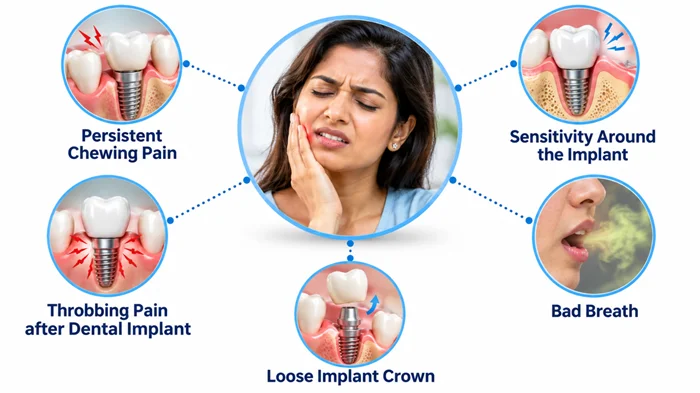
Sometimes tooth pain after getting a dental implant is not a big issue. Nevertheless, if symptoms get worse, you probably have an infection, a gum injury or unstable implant. Keep an eye out for the following warning signs particularly if the pain is worse when chewing.
Watch for these warning signs:
- Persistent chewing pain: May indicate excessive pressure or implant complications.
- Sensitivity Around the Implant: Unusual tenderness in the surrounding gum tissue may indicate irritation or inflammation.
- Throbbing pain after dental implant: May indicate underlying infection or inflammation.
- Persistent Bad Breath: An unpleasant smell that doesn’t go away despite proper oral hygiene may indicate an underlying issue.
- Loose implant crown: Clicking or movement may indicate a loose component.
Fever, swelling of the face, or painful swelling that is spreading could suggest an acute infection. It’s better to consult a dentist straight away for selecting the proper mode of treatment from the very beginning.
Is Chewing Pain After Implants Normal?
Feeling some discomfort after having dental implants fixed is quite normal. In the few days after surgery, the operated area may still be sensitive, tender or even a little swollen. The symptoms should go away naturally with time as the mouth heals.
If the dental implant gets completely healed, it should allow you to bite and chew without discomfort. A discomfort appearing a while after the operation, like a few months or even years later is a sign of infection, bite problem or implant movement.
So persistent pain, bleeding or swelling should not be taken lightly. Consult your dentist, and get a check-up and the proper treatment done, otherwise an already small problem may become serious.
Why to Choose Dr. Aishwarya?
The discomfort of a dental implant while chewing can arise for various reasons. There are several factors which can affect the implant negatively. Nevertheless, pinning down the exact reason necessitates a good dental check-up by a dentist.
Dr. Aishwarya, B.D.S., M.D.S. (Gold Specialist) supports patients in learning about and finding solutions for dental implant issues through clinical exams and other diagnostic techniques.
Dr. Aishwarya will evaluate your gum health, test the occlusal plane, go through the parts of the implant and the surrounding bone to find out where problems might start.
The clinic based on these observations would suggest a proper treatment plan involving bite alterations, infection control or fixing loose parts to bring your dental implant function back to normal.
Therefore, don’t hesitate to consult Dr. Aishwarya and get expert consultation and individualized dental implant treatment in Patna.
FAQs
Find quick answers to common questions about dental implant pain, possible complications, and costs.
Why does my tooth implant hurt when I bite down on it?
An implant may hurt when biting due to uneven bite pressure, gum infection, a loose crown or bone-related problems.
What are the first signs of a dental implant failing?
Common signs include persistent pain, implant movement, swollen gums, bleeding and pus around the implant.
How long should a dental implant hurt?
Mild soreness usually improves within a few days to a week, while persistent or worsening pain needs dental evaluation.
Can the body reject a dental implant?
The body rarely rejects an implant, but failed bone integration, infection or inflammation can cause implant failure.
How much does a dental implant cost in Patna?
The cost of dental implant in Patna generally ranges between ₹15,000 to ₹51,000 per tooth, depending on the clinic location and material.
Don’t Ignore Dental Implant Pain
A dental implant is supposed to make eating comfortable, not painful. If your tooth doesn’t get the proper time to chew because of pain, maybe it is your bite that is misaligned or that you have infected gums or bone-related issues are at play.
Meanwhile, after surgery, minor soreness is okay, but the feeling of constant pain should be examined by a dentist. That said, you should not only put off going to the dentist but also not attempt fixing a loose implant yourself.
Besides being a great way of preserving your implant, an early diagnosis will prevent more complications and get you back to chewing with ease. Therefore, selecting the right dentist guarantees proper care according to your actual ailment through them.
Book your consultation at Dr. Aishwarya, B.D.S., M.D.S. (Gold Specialist) today and take the first step towards healthier dental implants and comfortable chewing.