A good-looking, healthy smile can be very beneficial for a comfortable everyday life, especially with age. Missing teeth, erosion of enamel and problems with the gums all may create eating and speech difficulty.
Full mouth rehabilitation for seniors is a way to solve various dental issues. It utilizes different techniques to restore functionality of chewing, make the patient feel more comfortable and support good oral health. That said, senior citizens have diverse dental requirements, various diseases, and different treatment preferences.
Finding out details about the treatment can assist in making an educated choice. Read on to find out senior’s indications and how a treatment is carried out.
What is Full Mouth Rehabilitation?
Full mouth rehabilitation involves an amalgamation of various dental treatments that help recover from tooth damage and losses. At the same time, to improve the chewing function of the mouth. The different dental problems of a person are taken care of through only one customized treatment plan in full mouth rehabilitation.
As opposed to filling or a crown, which are local treatments, this method requires the whole mouth examination by the dentist.
Depending on individual needs, treatment may include:
- Dental crowns to protect damaged teeth.
- Bridges or dentures to replace missing teeth.
- Dental implants to support replacement teeth.
- Gum treatments to manage periodontal problems.
- Bite correction to improve chewing comfort.
At the same time, not all older people require all these dental procedures. The choice of dental treatment is made based on the condition of oral health, overall medical history, and personal goals.
In case of full mouth reconstructions for Patna, the dentist should guide the process thoroughly to ensure that the dental work is carried out properly.
When Is Full Mouth Rehabilitation Specifically Needed For Seniors?
Older adults may still be in need of major dental work besides age. Through years of natural wear, cavities that remained unfilled, and gum disease may cause a range of problems simultaneously. If you are able to detect your early signs, you have more time and resources to find the right treatment for older folks.
Common signs you need full mouth rehabilitation may include:
- Multiple missing teeth: Gaps can make chewing difficult and affect nearby teeth.
- Damaged or worn teeth: Cracks and severe wear may reduce tooth strength.
- Difficulty chewing: Dental problems can make eating certain foods uncomfortable.
- Persistent tooth pain: Repeated discomfort may indicate decay or other dental issues.
- Bleeding or swollen gums: These symptoms may signal gum disease requiring professional care.
- Poorly fitting dentures: Loose dentures can cause soreness and interfere with eating.
- Changes in your bite: Uneven tooth contact may affect chewing comfort.
However, the signs you need full mouth rehabilitation don’t always mean extensive treatment is necessary. Your dentist will examine your teeth, gums, and bite to identify the actual cause.
What Does Full Mouth Rehabilitation Actually Involve?
The dentist performs a thorough investigation of your teeth, gums, bite, and jawbone as the first step in the process of full mouth rehabilitation. The dentist may take X-rays to pinpoint issues and to decide which treatments are best suited for you.
The dentist of an elder will factor in medical problems, taking drugs, and the person’s own choices before designing the treatment plan.
Restoring Damaged Teeth
Poorly cared-for, natural teeth can develop cavities and cracks from years of constant stress. Based upon the extent of damage, dentists may suggest fillings or crowns as well as other kinds of repairs.
Fillings are meant for fixing cavities in less damaged areas. Whereas crowns go over weakened teeth, thus protecting and covering them. Such procedures not only help chewing function, tooth preservation will also be achieved.
Replacing Missing Teeth
Loss of teeth might lead to difficulties in chewing and speaking in addition to destabilizing the teeth in the vicinity so that doctors, for example, will advise bridges, dentures or implants.
The various methods of fixing missing teeth, each come with their pros and cons. Based on factors such as jawbone condition, oral cleanliness, and comfort, the dentist will recommend an implantation method for replacing the missing tooth(s).
Treating Gum Problems
Tooth-supporting and retaining restorations rely on the presence of healthy periodontal tissue around them. If periodontitis is not treated, it could lead to swelling at the level of the gum tissues, gingival hemorrhage, as well as progressive destruction of tooth structures.
Usually, dentists will suggest that patients undergo a thorough cleaning procedure or receive periodontal care if there are significant problems present to address them prior to getting the restorations done.
Correcting Bite Problems
Old, broken or bad teeth positions can also alter your upper & lower teeth contact. As a result, biting pressure may become uneven and chewing will become more difficult. With that in mind, the dental cause dictates the dentist to either remake certain damaged teeth or to refinish existing restorations in order to bring bite relations back to their optimum.
Planning Recovery and Follow-Ups
Full mouth reconstruction might involve multiple visits as opposed to finishing everything in a single appointment. Some procedures will require a healing period prior to placing the final restorations.
Your dentist will provide information on the projected time frame, fees involved, and what to expect as far as follow-up care is concerned. Keeping up with your dentists’ visits and maintaining good cleanliness practices will assist in the longevity of your restorations.
Full mouth rehabilitation for seniors not only balances oral health, but also comfort, and individual treatment plan and goals. In other words, a carefully planned individual approach helps in treating already diagnosed problems and, at the same time, maintaining a functional lifestyle.
Benefits Of Full Mouth Rehabilitation for Seniors
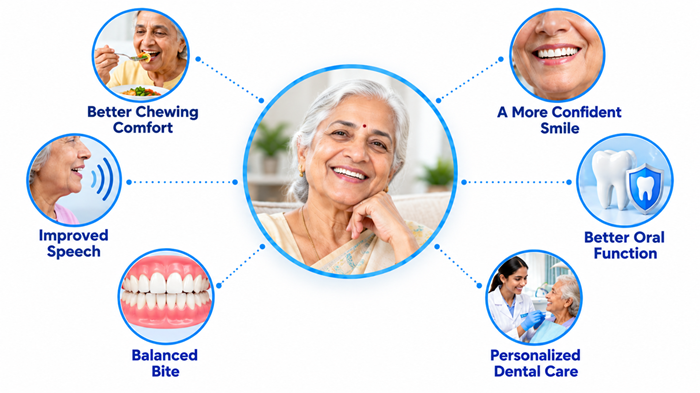
Dental issues can impact more than just the appearance of your face. They can even render eating, speaking, and performing daily activities a pain, literally. But, the good news is, with the right restorative procedures, elderly get back their comfort and confidence.
The benefits of full mouth rehabilitation may include:
- Better chewing comfort: Restored teeth can make eating easier and more comfortable.
- Improved speech: Replacing missing teeth may help address certain speech difficulties.
- Balanced bite: Properly planned restorations can improve how your teeth meet.
- A more confident smile: Repairing damaged teeth can improve smile appearance.
- Better oral function: Suitable restorations can help seniors manage everyday dental activities.
- Personalized dental care: A coordinated treatment plan addresses multiple dental concerns together.
However, results depend on oral health, treatment suitability, and ongoing dental care. Regular check-ups and good oral hygiene at the appropriate dental clinic in Patna help protect your restorations and support long-term comfort.
Why to Choose Dr. Aishwarya for Full Mouth Rehabilitation?
Choosing Dr. Aishwarya, B.D.S., M.D.S. (Gold Medalist) gives the elderly an opportunity to discover various dental options to deal with different dental difficulties. Here, the patients can undergo restorative treatments such as dental implants, crowns, bridges, and dentures.
Solutions that can be used to replace missing teeth, repair broken ones, and resolve chewing issues. Older people can, in the course of the consultation, share their problems and understand what kind of procedures would be best for them, how much they might cost, and how long the process of recovery will take.
Here, full mouth rehabilitation for seniors is supported by a custom-made treatment plan that takes care of each person’s oral health requirements.
Regular follow-ups and proper aftercare can also support treatment maintenance, improve everyday comfort, and help seniors maintain better oral health.
FAQs
Is full mouth rehabilitation suitable for senior citizens?
Yes, many seniors can benefit from full mouth rehabilitation. The dentist assesses oral health, medical history, and treatment suitability before recommending procedures.
How long does full mouth rehabilitation take?
Treatment may take several weeks or months, depending on the procedures required. Dental implants often need additional healing time before final restorations.
What is the cost of Full Mouth Rehabilitation in Patna?
The cost of full mouth rehabilitation in Patna generally ranges from ₹1,40,000 to ₹6,00,000+ total, depending on the extent of the treatment, the number of implants or crowns used, and the materials chosen.
Are dental implants suitable for older adults?
Age alone does not prevent someone from receiving dental implants. Bone health, medical conditions, medications, and healing ability help determine suitability.
How can seniors maintain their dental restorations?
Brush twice daily, clean between teeth, and follow your dentist’s care instructions. Regular dental check-ups also help identify problems early.
Conclusion
There’s no reason why getting older should mean losing out on the simple joy of eating well and smiling without hesitation. If dental issues are getting you down, the right treatment can restore comfort and confidence.
At Dr. Aishwarya, B.D.S., M.D.S. (Gold Medalist), find out the ways to replace the missing teeth, treat broken teeth and other serious dental problems, by choosing the right methodology to meet your needs.
Schedule a consultation today to discuss your dental concerns, explore suitable treatment options, and understand the expected costs and recovery process.