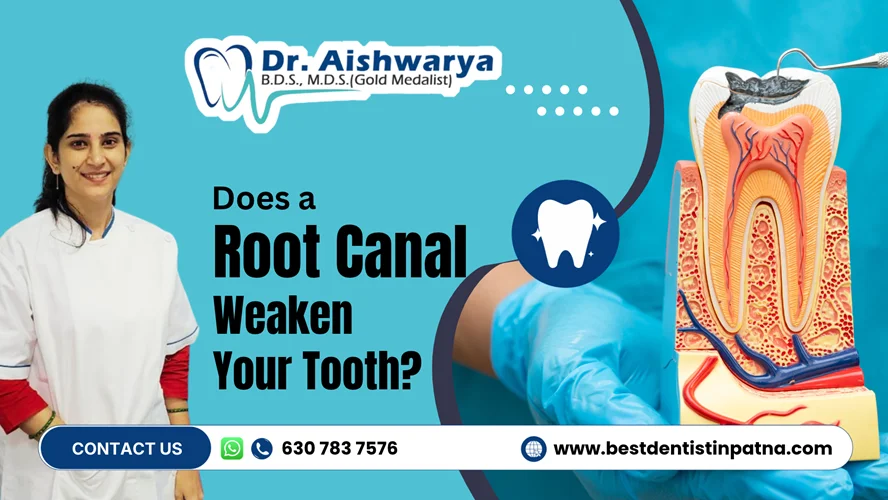
Root canal treatment is usually carried out to treat decay, cracks or other dental problems that have caused an infection within the inner portion of a tooth. These types of procedures can be off-putting to many patients and can bring about concerns relating to the long lasting effects that the root canal can have on the tooth.
Does Root Canal Treatment Weaken Teeth? The simple answer is NO.
A root canal treated tooth does not become weaker than before. But, because a tooth needs a root canal treatment often is badly decayed, cracked or has other large defects, the tooth can become fragile after the treatment.
By learning facts about root canal treatment and tooth strength, you will be able to maintain your dental health.
Does Root Canal Treatment Make Your Teeth Weak?
No, root canal treatment does not have to weaken your tooth.
Actually, the process of root canal treatment in Patna consists of removing the pulp from a tooth and then cleansing and filling the root canals to prevent any new infection from forming. The pulp contains nerves, blood vessels, etc. This tissue can get infected when bacteria from a deep decay or crack enter the pulp. This causes pain and inflammation in the tissue.
During the root canal treatment the affected pulp is removed from the tooth, while the greatest part of the natural dental structure is preserved. Much of the decay on teeth requiring a root canal has affected a large portion of the tooth and in many cases there is minimal natural tooth structure remaining.
Thus, the risk of a tooth cracking increases due to pre-existing decay and damage, rather than the root canal treatment itself. Understanding common myths about root canal treatment can help clear up such misconceptions.
Why Can a Tooth Become Brittle After Root Canal Treatment?
Several factors can affect the strength of a tooth after root canal treatment.
1. Loss of Natural Tooth Structure
Large cavities penetrate deep into the tooth structure. As a result a considerable part of the tooth has already deteriorated before treatment can even start. In addition to treating the infected pulp, the dentist also has to remove considerable parts of the tooth structure.
This remaining tooth structure may now be more sensitive to chewing and may fracture under normal use. It is particularly important in the posterior region (molars and premolars) where they are subjected to high chewing forces.
2. Previous Tooth Infection or Decay
A tooth needing a root canal has typically already undergone significant deterioration.
Untreated dental decay can allow bacteria to penetrate deeper into the tooth, potentially causing an infection in the pulp and surrounding tissues.
Root canal treatment can not reverse all the damage to the tooth structure that has occurred due to decay prior to treatment. This is why restoration of the tooth has to be undertaken appropriately after endodontic treatment has been completed.
3. Changes in the Tooth’s Internal Structure
Removing the infected pulp tissue changes the contents of the tooth. However, removing the nerves from a tooth does not necessarily make the tooth brittle. Loss of supporting tooth structure, previous tooth decay and cracks all have greater significance with regard to tooth fracture risk.
A dentist can assess these conditions and recommend the right restoration for your tooth. They can also help identify the possible causes of swelling after RCT if you experience it after treatment.
Does a Root Canal Make Your Tooth More Likely to Break?
The tooth that has been root canal treated can break as a portion of the tooth structure has been removed.
Most of the back teeth in the mouth (molars and premolars) are subjected to considerable chewing forces. Teeth with extensive decay and very large fillings are particularly at risk of cracking and fracturing.
Some factors that increase the risk include:
- Extensive tooth decay before treatment.
- Large existing fillings.
- Cracks in the natural tooth.
- Insufficient remaining tooth structure.
- Delaying a recommended permanent restoration.
- Teeth grinding or biting hard objects.
However, just because a tooth has been treated by a root canal, doesn’t mean it’s going to break. Properly restoring a tooth that has been root canal treated and subsequent care will ensure that the tooth remains healthy for many years.
How Can You Protect Your Tooth After Root Canal Treatment?
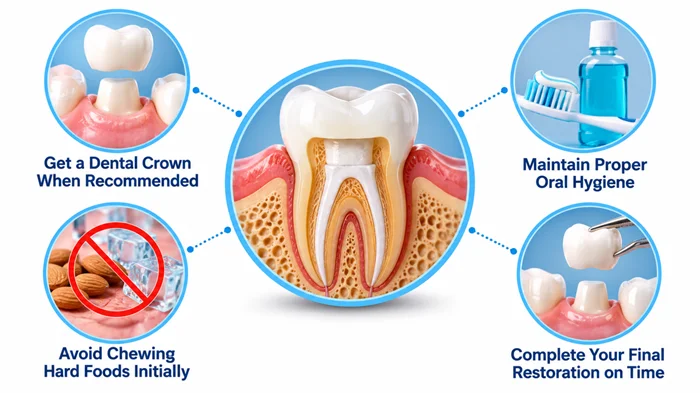
Following the right precautions after the root canal treatment can help protect your tooth and maintain its strength and functions:
- Get a Dental Crown When Recommended: A dental crown covers and protects the treated tooth. Dentists often recommend crowns for molars and premolars, especially when significant tooth structure is lost. The need for a crown depends on the tooth’s location, remaining structure, and extent of damage.
- Avoid Chewing Hard Foods Initially: Avoid putting excessive pressure on the treated tooth, especially while a temporary filling is in place. Stay away from ice-cream, hard candies, tough nuts, and bite directly into hard foods. Follow your dentist’s advice before resuming normal chewing.
- Maintain Proper Oral Hygiene: Brush twice daily with fluoride toothpaste, floss regularly, clean carefully around fillings and crowns, limit sugary foods, and schedule regular dental check-ups.
- Complete Your Final Restoration on Time: Don’t delay your permanent filling or crown. Temporary fillings are not designed for long-term use, and delays can increase the risk of tooth damage, fractures, and reinfection.
Always follow your dentist’s recommendations and attend scheduled follow-up appointments to keep your treated tooth healthy. Also, watch for the signs of a failed root canal so you can seek dental care if any unusual symptoms appear.
Is a Dental Crown Always Necessary After Root Canal Treatment?
No, a dental crown is not always required after root canal treatment.
Whether or not a dental crown is required after a root canal depends on two things: the amount of natural tooth structure left in the tooth and the location of the tooth in the mouth.
A crown may be recommended when:
- The tooth has extensive decay.
- A significant portion of the tooth has been removed.
- Molar or premolar tooth that is subjected to heavy chewing forces.
- Existing cracks or structural weaknesses require additional protection.
In some cases, a root filling can be filled with a bonded filling or with another form of conservative treatment. Your dentist will discuss the best treatment option with you after examining your tooth.
How Long Does a Tooth Last After Root Canal Treatment?
A tooth that has been treated correctly and restored can function for many years, but its lifespan varies. However, experiencing tooth pain after root canal may indicate an underlying issue that needs dental attention.
These include:
- Quality of treatment: How well was the tooth cleaned, disinfected and filled?
- Tooth Structure: The amount of remaining tooth structure (the tooth itself), and its ability to resist fracturing off.
- Final restoration: The filling or crown placed on the treated tooth in order to protect it.
- Oral hygiene: Teeth need to be cleaned on a regular basis with toothbrush and toothpaste as well as with floss to prevent new decay.
- Dental habits: Avoiding teeth grinding and the biting of hard objects in order to prevent excessive pressure on teeth.
Regular dental check-ups help identify potential problems early and prevent further damage to the treated tooth.
Root Canal Treatment in Patna: Why Proper Dental Care Matters
Each restoration you can make is determined by the actual condition of your tooth and how much natural tooth structure it has left. Some teeth will benefit most from being crowned to prevent further damage, others can just get filled again. So, it is always a matter of the dentist making the right decision for each of them.
Dr. Aishwarya, B.D.S., M.D.S. (Gold Medalist) makes it their main priority for a patient to get the best possible dental treatment through a combination of thorough diagnosis, customized therapy planning, and a correct postoperative course. Consult a certified dental clinic in Patna if you have questions about your treated tooth and for an appropriate assessment and suggestions.
Frequent visits to dental professionals and following the oral health instructions given to you can safeguard your remaining natural teeth and preserve chewing function well.
FAQs
Here are answers to some commonly asked questions about root canal treatment, its safety, and its effects on natural teeth.
Is it better to avoid a root canal?
No, a root canal should not be avoided when necessary, as it helps eliminate infection and save your natural tooth.
How risky is root canal treatment?
Root canal treatment is generally safe and effective when performed by a qualified dental professional.
Does a root canal remove all nerves?
Yes, root canal treatment removes the infected pulp, which contains nerves and blood vessels, from inside the tooth.
Conclusion
The aim of root canal treatment is to clear an infection and save a natural tooth. In reality, root filled teeth do not become weak, but a tooth with pre-existing decay, cracks or other damage to the tooth structure, and an inadequate restoration can break.
Permanent restorations as recommended by your dentist, good oral health and adhering to your dentist’s instructions will help you to keep your treated tooth safe.
For any concerns regarding the strength of your tooth after root canal treatment, kindly consult Dr. Aishwarya, B.D.S., M.D.S. (Gold Medalist) for proper dental advice and evaluation.